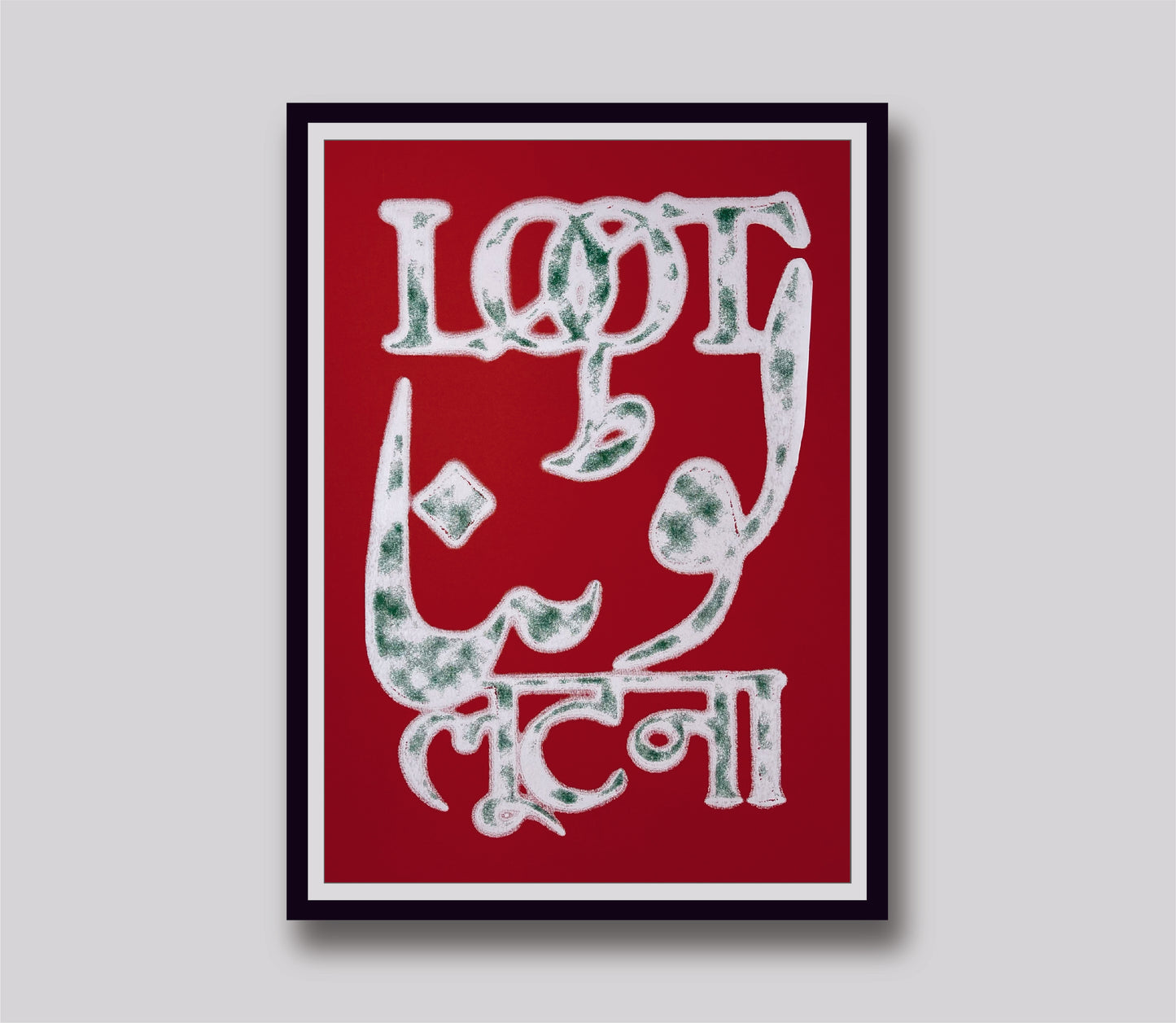
Furqan Jawed | LOOT
Furqan Jawed | LOOT
Couldn't load pickup availability
Furqan Jawed
LOOT, 2020
Screenprint on Arjowiggins Keaykolour Chilli Pepper (300 GSM) paper
42 x 29.7 cm | 16.5 x 11.7 inches
Signed. Limited Edition of 20.
Printed under the close supervision of artist Furqan Jawed this limited edition print is individually numbered and signed by the artist in pencil and is accompanied by a certificate of authenticity.
On 29th May 2020, as a reaction to the ‘Black Lives Matter’ protests in Minneapolis, President Donald Trump tweeted: "When the looting starts, the shooting starts." These words are powerful; not only because of the executive authority held by the speaker, but because of the histories contained within them. “Looting”, taken from the Hindi and Urdu verb lootna/ لوٹنا / लूटना, meaning "to steal”, entered the English language during the British Raj. A recent Instagram post by @wordsinurdu asks “What caused the British to start using this word? Was it the centuries of plundering of South Asia's natural resources and wealth? Or did the British reach for this word when civil unrest became a powerful tool for South Asians to fight for independence
In common Hindi and Urdu parlance ‘loot’ describes acts of theft. But the word is also routinely used in romantic and devotional songs and poetry. This positive usage became especially popular in the film songs of post-independence India. In a celebratory duet from the 1958 movie Howrah Bridge, as Mohammad Rafi sings "Gora rang, chunariya kali, motiyon wali, ke dil mera loot liya" (Your fair complexion, complemented by your black scarf with pearls, has looted me of my heart), the background singers and dancers all cheer and Asha Bhosle's voice responds “Teri pagdi rangberangi, lage mainu changi, ke dil mera loot liya" (Well, your colourful turban has looted me too). This is just one example of many in which ‘loot’ in the subcontinent signifies a playful relationship of reciprocal love.
By placing the text "LOOT, लूटना, لوٹنا " in English, Hindi and Urdu in a single frame, the poster raises questions about the origins and the metamorphosis of the semantics of the word "loot". In addition to the looting of resources and labour that the British actively pursued during colonization, there was also appropriation, or looting of language that happened. This work draws attention to both the origin and history of the word as well as the continued evolution of the notion of “looting” in the subcontinent and in the West.
Prints are shipped unframed and rolled.
Share